



1. Why Retinol Exploded in 2025

Retinol didn’t just become popular in 2025 it became a global obsession. Search trends across the world showed one thing very clearly, people wanted faster, safer, and proven ways to fix aging, acne, and pigmentation. And almost every skin expert repeated the same line again and again: “Retinol is still the only ingredient with strong evidence for improving fine lines and renewing skin.”
Because of this, social media pushed it harder than ever. Short videos, before-after reels, and dermatologist-approved routines made people feel like retinol was the secret shortcut to glowing, smooth skin. But at the same time, beginners everywhere were scared. And honestly? They had a good reason to be.
Why Beginners Fear Retinol (and why many quit early)
Most people who try retinol for the first time experience:
- Burning or stinging.
- Redness.
- Peeling.
- Dry patches.
- Purging (temporary breakouts).
These reactions make beginners think something is wrong even though, in many cases, it’s completely normal during the adjustment phase.
This fear creates a big confusion: If retinol is so good, why does it irritate so many people?
Why Retinol Became Even Bigger in India in 2025
In India especially, retinol exploded because it targeted the top skin problems Indians face:
- Pigmentation
Most Indian skin struggles with dark spots, tanning, melasma, and post-acne marks.
Retinol helps fade these gradually by speeding up cell turnover.
- Acne & Texture
Teens and adults both deal with hormonal acne, tiny bumps, clogged pores, and uneven skin.
Retinol unclogs pores and smooths rough texture over time.
- Uneven Tone
Lifestyle, pollution, stress, and sun exposure make Indian skin dull easily.
Retinol slowly brightens the overall tone and gives a fresh look.
- Anti-Aging Awareness
For the first time, Indians started using anti-aging ingredients in their early 20s because 2025 trends focused heavily on prevention rather than correction.
The Reason Retinol Went Viral in 2025 (According to New Research)
“Is retinol really the secret to glass skin or just another overhyped trend?”
Comparing retinol with other popular ingredients like peptides, niacinamide, and tranexamic acid was a major focus of 2025 research.
What researchers discovered was straightforward:
When used properly and gradually, retinol continues to be the most effective ingredient for long-term skin renewal. This scientific confidence made the trend explode across all age groups.
2. What Exactly Is Retinol?
Retinol sounds complicated, but once you break it down, it’s actually one of the easiest skincare ingredients to understand. Think of it as a vitamin that tells your skin to behave younger, smoother, and healthier. Let’s start from the very basics.
Retinoids: The Big Family
Retinol belongs to a group of ingredients called retinoids, which all come from Vitamin A. But not all retinoids have the same strength. Here’s the simplest way to understand them:
1. Retinol (suitable for beginners)
In skincare products, this is the most prevalent one. It is more gentle and ideal for novices because it operates slowly. Ideal for those who wish to address glow issues or begin anti-aging.
2. Retinal / Retinaldehyde (Stronger & Faster)
Retinal only requires one step to transform into active vitamin A in your skin, whereas retinol requires two. Although it can irritate more easily, it works more quickly. Excellent for those who have been using retinol for a few months.
3. Tretinoin (Prescription-Strength)
This is the strongest form, available only with a dermatologist’s prescription. Works directly without any conversion. Amazing for acne, pigmentation, and wrinkles but extremely irritating if used wrong.
Thus, to put it simply:
Retinol is slow and smooth.
Retinal is quicker.
Tretinoin is the harshest but fastest.
What Retinol Actually Does Inside Your Skin (Cellular Level)


Here is where it gets interesting.
When retinol enters your skin, your body converts it into retinoic acid the active form. This retinoic acid goes deep into the skin and starts working at a cellular level:
- It makes skin cells renew faster
Old, dull cells shed quicker.
New, fresh cells rise to the surface.
This is why skin looks smoother and brighter over time.
- It boosts collagen
Collagen is the protein that keeps skin firm and plump.
After the age of 20, collagen naturally drops every year.
Retinol slows this breakdown and pushes your skin to make more.
- It unclogs pores
It keeps dead skin and oil from blocking pores, reducing pimples and tiny bumps.
- It evens out pigmentation
By speeding up cell turnover, dark spots fade slowly but steadily.
In short: Retinol teaches your skin to behave the way it used to when you were younger.
Common Myths vs Facts
Myth 1: Retinol thins the skin
Fact: It thins the top dead layer temporarily during early peeling, but thickens the deeper, healthy layer by boosting collagen.
Myth 2: Retinol works overnight
Fact: Real results take 6–12 weeks. Quick changes are usually irritation, not improvement.
Myth 3: People with brown or Indian skin should avoid retinol
Fact: Retinol is safe for all skin tones including Indian and deeper skin when used correctly.
Myth 4: You can’t use retinol in your 20s
Fact: Starting in your 20s is actually ideal because it prevents early signs of aging.
What 2025 Research Says
“Do you really need retinol in your 20s?”
Recent 2025 findings showed that early and controlled use of retinol helps prevent collagen loss, and this is one big reason dermatologists recommend starting slow in the mid-20s instead of waiting for wrinkles to appear. It also confirmed that retinol works safely on all Fitzpatrick skin types (Indian skin included) as long as:
- You begin with a small percentage,
- Use it exclusively at night and combine it with sunscreen and moisturizer.
3. What Skin Issues Can Retinol Actually Improve?
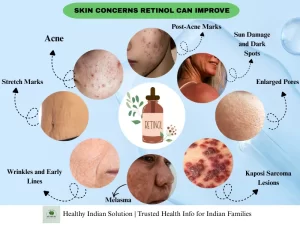
Retinol is everywhere today serums, creams, night gels but most people still aren’t sure what it truly helps with. While many over-the-counter retinol products can make a difference, some skin concerns need stronger, prescription versions recommended by a dermatologist. Here’s a clear, simple explanation to how retinol works on different skin problems and what to expect when you use it.
1. Retinol for Acne
Acne happens when dead skin and oils block your pores, leading to blackheads, whiteheads, or painful bumps.
Retinol helps by:
- Keeping pores from getting clogged.
- Clearing out built-up dead skin.
- Reducing the chances of future breakouts.
Your acne may appear worse during the first few weeks; this is called purging. It’s common and usually goes away as your skin gets used to it. With regular use, your skin appears more even and the pimples begin to go away.
2. Retinol for Post-Acne Marks
Due to inflammation, acne frequently leaves behind red or dark spots after healing. Retinol accelerates your skin’s natural healing process, which helps you get rid of these marks.
However, keep in mind:
- Retinol works best on flat acne marks.
- Deep, pitted, or raised scars usually need clinical procedures like lasers or micro-needling.
3. Retinol for Sun Damage and Dark Spots
After being exposed to the sun, your skin produces more melanin, which causes dark spots. By boosting cell turnover, retinol can help gradually lighten these patches. Most people need a few weeks to months to notice a noticeable improvement; it won’t remove pigment overnight. For an accurate diagnosis, it is best to see a dermatologist if your dark spots are strange, painful, or spreading.
4. Retinol for Enlarged Pores
They appear stretched and have large pores when they are filled with dead skin and oil.
What Retinol Does:
- Clears the build-up.
- Thickens the deeper skin layers.
- Makes pores look smaller over time.
Although it doesn’t permanently “shrink” pores, it greatly reduces their visibility.
5. Retinoids for Kaposi Sarcoma Lesions
Some retinoid gels (like alitretinoin) are used under medical supervision to slow the growth of Kaposi sarcoma patches. These products don’t cure the cancer, but they help reduce the speed at which the lesions spread. This should only be used when advised by a specialist.
6. Retinol or Tretinoin for Melasma
Brown or greyish patches are caused by melasma, particularly after sun exposure or hormonal changes (usually during pregnancy). When applied regularly, topical retinoids typically prescription tretinoin may help lighten melasma.
Important:
- Retinoids should not be used by pregnant women without a doctor’s consent.
- Melasma can get worse if you don’t wear sunscreen.
7. Retinol for Psoriasis
Psoriasis results in thick, scaly patches because skin cells grow quickly. Certain retinoids can lessen redness and slow this overgrowth. However, doctors frequently mix retinoids with calming steroid creams because they can irritate sensitive skin.
8. Retinol for Stretch Marks
Stretch marks appear when skin stretches too fast due to pregnancy, weight changes, or muscle growth. Retinol can help older stretch marks look softer and less sharp in color. Women who are pregnant or breastfeeding should avoid retinoids unless a doctor approves them.
9. Retinol for Wrinkles and Early Lines
Wrinkles form as collagen breaks down with age.
Retinol helps by:
- Slowing collagen loss.
- Encouraging new collagen formation.
- Improving skin elasticity.
The skin gradually looks firmer and smoother, but noticeable changes take time usually a few months.
Is Retinol Suitable for Everyone?
Retinol is a powerful ingredient, but not every skin type responds well. You may need to be cautious if you have:
- Extra sensitive or allergy-prone skin.
- Rosacea.
- Active eczema.
- A weak skin barrier.
- A lifestyle with high sun exposure.
Gentler substitutes like bakuchiol, azelaic acid, or peptides may be more effective if retinol feels too potent. Additionally, using sunscreen during the day is essential because retinol can increase your skin’s sensitivity to the sun.
4. How to Start Using Retinol the Right Way
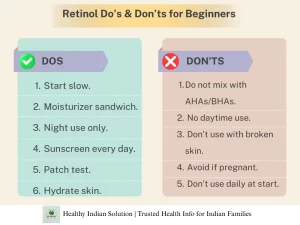
Retinol can do a lot for your skin, but only if you use it correctly. Because it’s a powerful ingredient, your skin needs time to adjust. Here’s a quick, beginner-safe way to introduce retinol into your routine without irritation.
1. Start with a Patch Test
Before applying retinol on your whole face, test a tiny amount on one small area like near your jawline. Leave it for 24–48 hours and watch for strong redness, burning, or unusual itching.
If your skin looks normal or only slightly dry, you can move to the next step.
2. How to Apply Retinol
Here’s a simple nighttime routine to follow:
Step 1: Gently Clean
Use a gentle, non-foaming cleanser to wash your face. Retinol already makes you more sensitive, so don’t scrub or use harsh tools.
Step 2: Let Your Skin Dry Completely
On wet skin, retinol is more harsh. After cleansing, give your face a minute or two to fully dry.
Step 3: Use a Minimal Amount
For your entire face, use just a pea-sized amount. Apply it sparingly, being careful not to irritate the corners of your mouth, eyes, or nose.
Step 4: Use Moisturizer to Seal It
Apply a hydrating, non-comedogenic moisturizer to finish. This keeps your skin barrier intact and lessens dryness.
3. How Often Should You Use Retinol?
Slow and steady is the best strategy if you’re new to retinol. Use it every third or every second night to start. You can switch to alternate nights once your skin stops reacting so strongly. Some people use it nearly every day with time and good tolerance, but rushing it will only irritate them. It’s common to experience some initial redness, tingling, or dryness. Usually, these disappear as your skin adjusts.
5. The Perfect Retinol Routine (Beginner Intermediate Pro)
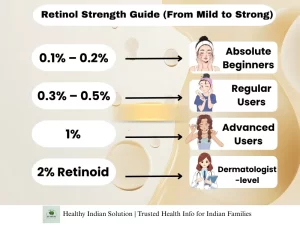
If you’ve ever wondered why some people glow effortlessly with retinol while others end up red, peeling, and frustrated… the secret isn’t the product it’s the routine. Retinol is powerful, but when used the right way, it becomes one of the safest and most effective anti-aging tools of 2025. Here’s the simple explanation anyone can follow.
A. Routine for Beginners (0.2%–0.3%)
1. Frequency Schedule (First Six Weeks)
week How Frequently to Use
Week 1: 1× per week
Week 2: 1-2 times a week
Week 3: Two times a week
Week 4: 2-3 times a week
Week 5 & 6: 3× per week (max for beginners)
This timeline should not be rushed; consistency is more important than strength.
2. The “Sandwich Method” (Beginner-Friendly)
This method protects your skin and reduces irritation:
- Cleanser.
- Moisturizer.
- Retinol.
- Moisturizer again.
This creates a buffer that slows retinol penetration without reducing its effectiveness too much.
3. What NOT to Mix
Retinol should not be combined with the following until your skin adjusts:
- Lactic acid or glycolic acid.
- Peroxide benzoyl.
- Vitamin C (same regimen).
- Acid salicylic.
- Toners or scrubs that exfoliate.
- Products with strong fragrances.
The likelihood of dryness, burning, and irritation is increased by these combinations.
B. Intermediate Level Routine (0.5%)
If you’ve been using low-strength retinol for at least 8–12 weeks without major irritation, you can step up to 0.5%.
1. Alternate-Night Routine (2025 Approved)
This calms inflammation and prevents the “retinol rollercoaster.”
Night 1: Retinol Night
- Cleanser.
- Niacinamide serum (optional but highly recommended).
- Retinol 0.5%.
4. Moisturizer.
Night 2: Recovery Night
- Hydrating toner/essence.
- Hyaluronic acid.
- Barrier moisturizer or ceramide cream.
4. Repeat this cycle.
2. Why Combine Retinol With Niacinamide?
Niacinamide is like a support system for retinol as it:
- Reduces redness.
- Strengthens the skin barrier.
- Makes retinol more tolerable.
- Helps control acne and oil.
This combo is one of the most dermatologist-recommended pairs in 2025.
C. Pro Level Routine (1% Retinol → Retinal → Tretinoin)
This stage is for people whose skin is already used to retinoids and wants stronger results.
1. When Should You Upgrade?
Move to higher-strength retinoids only if:
- You’ve used 0.5% for at least 3–6 months.
- You no longer get irritation.
- Your skin barrier feels stable.
- You want deeper anti-aging results (texture, fine lines, pigmentation).
2. Strength Roadmap (2025)
1% Retinol: Good for visible fine lines and uneven texture
Retinal (Retinaldehyde): Works faster than retinol, less irritating than tretinoin
Tretinoin (Prescription only): Most powerful form; used for strong aging and acne concerns
3. How to Avoid Over-Exfoliation (Big Issue in 2025)
Signs your skin barrier is struggling:
- Burning after applying moisturizer.
- Extra shiny forehead (damage, not glow).
- Peeling around nose and mouth.
- Texture getting worse instead of better.
Fix:
- Stop exfoliants for 1–2 weeks.
- Add ceramides and panthenol.
- Use retinoids every third night until stable.
4. Best Pro-Level Combinations
Once your skin is resilient:
Retinol/Retinal + Peptides: Excellent for firmness
Retinol + Niacinamide: For smoother texture
Tretinoin + Hyaluronic acid: To reduce dryness
Retinol + Copper Peptides (2025 trend): For improved elasticity
Note: Tretinoin should not be combined with strong acids unless a dermatologist is present.
2025’s secret tip:
Apply retinol around your eyes and mouth but buffer it with moisturizer first. These are the first areas to show aging, and using retinol early here can dramatically slow down fine-line formation.
How to do it safely:
- Moisturize under eyes and smile lines.
- Dab a tiny amount of retinol.
- Seal again with moisturizer.
- This method is gentle and effective.
6. What Retinol Can Do for Your Skin and What You Should Be Aware of
One of the few ingredients in skincare products that truly alters the behavior of your skin is retinol. Like any potent ingredient, it has some drawbacks if not used properly, but it strengthens the skin, enhances texture, and keeps pores clear. This is a clear, straightforward breakdown.
Benefits: Why People Love Retinol
Retinol works on multiple layers of the skin, which is why it shows results in so many areas. Some of its biggest advantages include:
- Stronger, firmer skin over time
Retinol slows down the breakdown of collagen and promotes the production of new collagen by your skin. Your face appears firmer and healthier as a result of increased elasticity.
- A smoother texture
Retinol helps old skin cells shed more quickly, giving the appearance of smoother, more refined skin.
- Less breakouts and clogged pores
By lowering the accumulation of oil and dead skin, which is one of the main causes of acne, retinol keeps pores clear.
Possible Side Effects: What You Might Notice at First
The majority of side effects are transient and occur while your skin adjusts. Typical responses consist of:
- Skin that is tight, dry, or irritated.
- Itching or mild burning.
- Flaking or redness.
- Sunlight sensitivity in the skin.
Once your skin barrier adjusts to the new routine, these typically go away.
How to Reduce Irritation & Use Retinol Safely
A few tweaks in your routine can make a big difference:
1. Start slow
Use retinol on alternate nights instead of daily, especially in the beginning.
2. Stick to one retinol product
Layering multiple retinoids or active ingredients will only increase irritation.
3. Allow your skin to dry before application
Applying retinol on damp skin makes it feel stronger and harsher.
4. Don’t use it on compromised skin
Avoid retinol if you have sunburn, open cuts, or active irritation.
5. Be strict with sun protection
Use at least SPF 30 during the day and try covering up when outdoors.
6. Ask a professional about your moisturizer routine
Some people do better applying moisturizer before retinol (the “sandwich method”), while others prefer it after.
Can Retinol Harm Your Skin?
Retinol doesn’t “damage” healthy skin when used correctly, but misusing it can lead to problems:
- You may burn much faster in the sun.
- High or unnecessary doses can overwhelm your skin barrier.
- Excessive UV exposure while using retinol increases long-term skin risks.
- Using sunscreen consistently and avoiding overuse will keep retinol safe for most people.
When Is the Right Time to Contact a Dermatologist?
There are times when seeking professional assistance is the safest option, but you don’t always need to call a doctor for minor tingling or dry patches. If you observe any of the following, get in touch with a skincare expert:
1. Your Skin Responds Powerfully
Your skin may not be a good fit for retinol if it begins to exhibit severe redness, burning, swelling, or peeling that doesn’t go away even after stopping the medication. In order to stop things from getting worse, a dermatologist can promptly advise you on what to do next.
2. Your Routine Isn’t Working
Been using a mild, over-the-counter retinol for a few months but still not seeing any visible change? Sometimes your skin may need a stronger prescription formula, or your routine may need a small adjustment. A doctor can tell you exactly what step to take instead of guessing.
7. TOP RETINOL FAQs
1. What is retinol and why is it so popular?
Retinol is a form of Vitamin A that speeds up cell turnover, boosts collagen, reduces wrinkles, fades pigmentation, and treats acne. It’s popular because it delivers visible, proven results backed by dermatologists.
2. When should I start using retinol?
Most dermatologists recommend starting in your mid-20s to prevent early aging. But you can begin earlier for acne or pigmentation just use a low-strength formula and go slow.
3. How long does retinol take to show results?
You will see smoother texture in 4–6 weeks, clearer skin in 8 weeks, and anti-aging benefits in 12+ weeks. Retinol takes time but works deeply and permanently.
4. Why does my skin burn or peel after starting retinol?
This is typical of novices. Retinol accelerates cell turnover, causing temporary dryness, redness, or peeling. Start slowly, moisturize well, and avoid mixing with strong acids.
5. Is retinol compatible with AHA, BHA, or vitamin C?
Not that same evening. These combinations increase irritation.
Apply this rule:
- Morning: Vitamin C.
- Retinol at night.
- AHA/BHA: once or twice a week,Your skin barrier is protected as a result.
6. Should I use retinol every day?
No. Begin with 1–2 times a week, then slowly increase. To prevent over-exfoliation, even experts frequently use it on alternate nights.
7. Can retinol remove dark spots and pigmentation?
Yes, retinol boosts cell turnover and reduces melanin deposits. Best results come when paired with sunscreen and niacinamide. It works especially well for Indian and brown skin.
8. Is retinol safe for sensitive skin?
Yes, but choose encapsulated retinol or 0.1–0.2% formulas. Apply on completely dry skin, moisturize before and after, and avoid daily use.
9. Can I use retinol around the eyes?
Yes, this is where aging starts first. But always buffer with moisturizer to prevent irritation. Retinol eye creams are even safer for beginners.
10. What strength of retinol should I start with?
Beginners should start with 0.2–0.3%. Intermediate users can use 0.5%, and advanced users can move to 1% or retinal/tretinoin but only after skin adjusts.
11. Is medical-grade retinol better than over-the-counter retinol?
Yes, medical-grade retinoids like tretinoin or adapalene work faster and deeper. But they’re stronger, require prescriptions, and can cause irritation if not used properly.
12. What’s the best anti-aging combination with retinol for maximum results?
Dermatologists recommend pairing retinol with:
- Peptides (night)
- Niacinamide (barrier support)
- Sunscreen (day): This gives a premium, clinical-grade anti-aging routine
13. Can I use retinol after professional treatments like chemical peels or lasers?
Not immediately. You must wait 5–7 days after peels or lasers until the skin barrier heals. Retinol + laser too early can cause irritation or sensitivity.
A Note From Healthy Indian Solution


Thank you for taking the time to read and understand how retinol truly works. At Healthy Indian Solution, our goal is simple to give you honest, practical skincare guidance that actually helps, not confuses you. Skincare is not a race. It’s a habit, a slow transformation, and a promise you make to yourself every day. If you move gently and choose what supports your skin, you’ll always move in the right direction.
Quote to close the journey:
“Great skin isn’t built in a day it’s built in the small choices you make every night.”
We hope this guide gives you clarity, confidence, and a calm start to your retinol journey. Your skin deserves patience, and so do you.