



1. Introduction: Slugging vs Skin Flooding (2025 Edition)

If you follow skincare trends, you’ve probably noticed one thing two routines are ruling 2025: slugging and skin flooding. But the real question everyone is asking is:
“Which one actually works… and which one can damage your skin?”
Why This Topic Exploded in 2025
People all over the world are dealing with one common issue:
According to recent research 2025, moisture-barrier damage has become the No.1 skincare issue this year.. More breakouts, more irritation, more dryness, and more sensitivity even in people who never had these issues earlier.
This happened because of:
- Over-exfoliating.
- Strong actives used daily.
- Pollution and UV exposure.
- Changing climate patterns.
- Using too many products without understanding skin needs.
So now, every skincare lover wants just one thing: “How do I repair my skin barrier fast?”
Global Concerns
Across the world, users are asking:
- Is slugging safe for daily use?
- Does skin flooding clog pores?
- Which method is better for repairing the barrier?
- Does it work in hot or humid weather?
People want hydration without breakouts, and moisture without shine.
Indian Users Are More Confused Than Ever
Indian readers will find this topic even more important because our climate is completely different from that of Western nations.
Indian-specific issues:
1.High humidity causes sweat, clogged pores, and sticky skin.
- Skin prone to acne: Most young Indians are prone to breakouts.
- Affordable skincare: People don’t want pricey routines; they want results.
- Heat exposure: Dullness and dehydration are frequent.
5. Pollution from both indoor and outdoor sources weakens the skin’s barrier more quickly.
For this reason, people in India are always asking themselves, “Slugging vs. skin flooding – which one is right for MY skin and MY climate?“
In 2025, protecting your skin barrier is more important than just having glowing skin. And that’s precisely why skin flooding and slugging became so common. However, they function quite differently, and selecting the incorrect one may worsen rather than improve your skin.
2. Quick Overview: What Exactly Is Slugging & Skin Flooding? (2025 Guide)

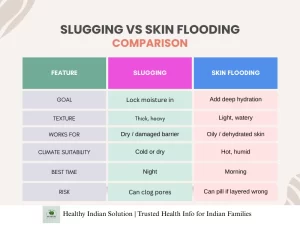
Before going deep into which one is better, here’s a simple and clear breakdown. Most people in 2025 skincare forums and research 2025 are trying to understand these two routines because both help repair a weak moisture barrier but in totally different ways.
Two routines, same goal – healthy skin.
But one works by locking moisture in, and the other by flooding skin with hydration. Knowing this difference can save your skin from breakouts or dryness.
What Is Slugging? (Short & Clear)
Slugging means sealing your skin with an occlusive layer. It prevents water loss and keeps moisture inside.
You use:
- Petroleum jelly
- Thick balms
- Heavy moisturizers
Why people do it in 2025:
Because most users are dealing with extreme dryness and damaged barriers, often from overusing strong actives.
Best for:
- Dry skin
- Damaged barrier
- Night routine
- Winter or dry weather
What Is Skin Flooding? (Short & Clear)
Skin flooding means layering multiple hydrating serums to fill your skin with moisture before sealing it lightly.
You use:.
- Hyaluronic acid
- Glycerin serums
- Panthenol
- Lightweight moisturizers
Why people do it in 2025:
Everyone wants hydration without heaviness, especially in hot and humid climates like India.
Best for:
- Oily skin
- Acne-prone skin
- Humid weather
- Morning routine
3. How They Work: The Science Behind Each Method (2025 Guide)
Most people keep asking one thing:
“Do these trends really work, or are they just social media hype?”
The truth is both slugging and skin flooding are based on simple skin science. They work, but only when used on the right skin type and in the right climate. Here’s the easy explanation.
A. How Slugging Works (Science in Simple Words)
Slugging creates a strong occlusive layer on top of your skin. This layer stops water from escaping your skin’s surface. Slugging prevents TEWL (Transepidermal Water Loss). TEWL basically means how much water your skin loses into the air.
When TEWL is high, skin becomes:
- Dry.
- Rough.
- Sensitive.
- Easily damaged.
So slugging works like a “moisture shield.” It traps water inside your skin and lets your barrier heal overnight.
Biological Benefits
Slugging is best for people whose:
- Skin barrier is weak.
- Skin feels tight or cracked.
- Skin gets flaky during winter.
- Skin reacts to most products.
The Impact of Climate
Global: Works best in dry countries like Canada, UK, USA winters.
India: Works ONLY in:
- Winters
- Dry states
- Air-conditioned indoor environments
- Not good for humid Indian cities because it can feel too heavy.
B. How Skin Flooding Works (Science Made Easy)
Skin flooding uses multiple lightweight hydrating layers to pull water into your skin.
Skin Flooding boosts hydration using humectants
Humectants are ingredients that attract and hold water.
Examples: hyaluronic acid, glycerin, panthenol, ectoin.
When layered correctly, these serums:
- Increase water levels in your skin.
- Make the skin look plump and smooth.
- Reduce dehydration lines.
- Calm irritation.
Biological Benefits
Best for people who have:
- Dehydrated skin (feels oily but dry inside).
- Fine lines caused by lack of water.
- Sensitivity from sun exposure.
- Acne-prone skin that cannot handle heavy products.
The Impact of Climate
Global: Works well in almost all climates because it’s lightweight.
India: Perfect for:
- Humid cities
- Hot summers
- Oily or acne-prone skin
- People who sweat easily
- Flooding keeps skin hydrated without making it greasy.
C. Which Skin Types Benefit the Most?
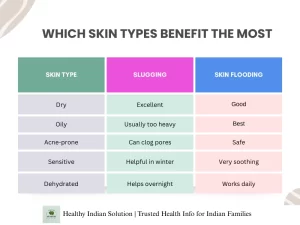
Thus, these trends are effective. However, they function differently and for different individuals. Slugging is similar to putting a warm blanket over your skin. Giving your skin a long, cool drink of water is similar to skin flooding. Your climate and your skin type decide which one is right.
If you want your skin to work with its natural 24-hour rhythm, don’t skip our Circadian Skincare blog it shows exactly when your skin absorbs products best.
4. Slugging vs Skin Flooding: Which One Is Better for Your Skin Type?
Most people choose the wrong trend and make their skin worse here’s how to avoid that. This section helps you pick the right method based on your skin, your climate, and your daily routine.
And yes, choosing wrong can lead to breakouts, irritation, or even more dryness.
A. The Best Option for Oily and Acne-Prone Skin – Skin Flooding
Oily skin often looks shiny but is actually dehydrated inside. This skin type needs water, not heavy creams. Skin flooding adds hydration without blocking pores.
Why flooding works:
- Lightweight layers don’t trap sweat.
- Humectants pull water into the skin.
- Calms inflammation.
- Doesn’t trigger new acne.
Avoid
Slugging on oily or acne-prone skin can trap sweat, dirt, and oil under a thick layer, leading to:
- Whiteheads
- Closed comedones
- Sticky, greasy feeling
- Indian Humidity Factor:
In cities like Mumbai, Goa, Kochi, Kolkata slugging become too heavy. Flooding feels breathable.
B. The Best Option for Dry or Dehydrated Skin – Slugging (night) + Flooding (day)
Dry skin lacks oil. Dehydrated skin lacks water. Slugging helps keep moisture locked in, while flooding fills the skin with hydration.
Why slugging helps:
- Stops moisture loss during cold nights.
- Repairs cracks in the barrier.
- Makes skin soft by morning.
- Hydrates deeply.
- Smoothens fine lines.
- Adds plumpness.
Global Weather Factor:
In winter countries (Canada, UK, USA), slugging is extremely effective because the air is dry. Dry air = more TEWL = better results with slugging.
C. The Best Option for Sensitive or Damaged Barriers – Mild Skin Flooding
When your barrier is irritated, too heavy products can burn or sting. Light hydrating layers work better.
Why flooding works here:
- Humectants calm irritation.
- Helps skin repair slowly.
- Doesn’t suffocate the skin.
- Works well even with redness.
Slugging only sometime helps (like in winter or if your skin is extremely dry) but if you feel warm or itchy under the layer, stop immediately.
D. The Best Option for Combination Skin – Both, but with Zones
Combination skin needs different routines for different areas.
Flooding:
- Use on oily T-zone.
- Keeps it hydrated without shine.
Slugging:
- Use on dry cheeks or around the mouth.
- Helps even out roughness.
- This targeted routine gives the best results without causing breakouts.
E. Indian Humid-Weather Issues
Indian humidity changes everything.
Most people sweat more, and thick creams feel too heavy.
Best for humid weather – Skin Flooding:
- Layers adjust to sweat.
- No greasy shine.
- Doesn’t clog pores.
- Perfect for acne-prone teenagers.
Slugging is okay only when:
- You sleep in AC.
- It’s winter.
- Your skin feels tight and dry.
F. Cold-Weather Global Concerns
In colder countries, skin loses water faster (TEWL increases).
This is why slugging became huge globally.
Best for cold weather – Slugging:
- Protects skin from dry air.
- Reduces flakiness instantly.
- Keeps hydration locked in overnight.
However, people with oily skin still prefer flooding, even in cold weather.
Note:
Choosing between slugging and skin flooding is not about trends it’s about understanding what your skin actually needs.
If your skin wants water – flood it.
If your skin wants protection – slug it.
Right method, right climate, right timing.
And if you prefer natural glow methods, our 10 Dermatologist-Approved Home Remedies blog will help you get visible results with simple, safe ingredients.
5. Real Concerns People Ask Worldwide
People across the world ask the same doubts, especially after the rise of both trends in 2025. Here are the most searched questions with short and simple answers.
Q1. Does slugging clog pores?
Slugging can clog pores if you already have oily or acne-prone skin. It’s safe only for dry or damaged skin in cool weather. Avoid slugging in humidity or if you sweat easily.
Q2. Is skin flooding safe for acne-prone skin?
Yes, it’s one of the safest routines for acne-prone skin. Light hydrating layers calm irritation, help with dehydration, and don’t block pores.
Q3. Can I do both together?
Yes, but only if you have very dry or damaged skin. Do flooding first (hydration) then slugging (seal). Not recommended for oily skin or in humid climates.
Q4. Which is better before makeup?
Skin flooding. It gives a smooth, hydrated base and helps makeup sit better. Slugging before makeup can make the skin slippery and greasy.
Q5. Is slugging safe in Indian tropical weather?
Mostly no. Hot and humid weather makes slugging feel heavy and can clog pores. Use it only in winter, AC rooms, or if your skin feels extremely dry.
Q6. Can men do these methods?
Yes, absolutely. Men’s skin also loses hydration and needs water just like women’s. Flooding works for all skin types. Slugging works for dry skin only.
Q7. Is Vaseline safe for slugging?
Yes, pure Vaseline is safe and dermatologist-approved. It doesn’t cause acne by itself but it can trap oil and sweat underneath. Best for dry, flaky, winter skin.
Q8. How often should I skin flood?
You can do it daily, morning or night. It’s gentle, lightweight, and supports hydration without irritation.
Q9. How often should I slug?
1-3 times a week is enough for most people. Daily slugging is only for extremely dry or barrier-damaged skin.
6. Detailed Instructions (Mini Routine): When to Select Which Routine
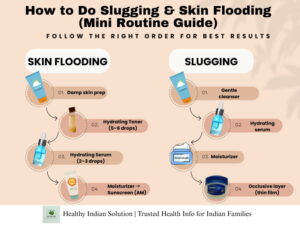
A. Slugging Routine (When Your Skin Needs Protection) When to Use Slugging
Use slugging when your skin feels:
- Tight or flaky.
- Rough because of winter air.
- Damaged from over-exfoliation.
- Dehydrated even after applying moisturizer.
Because the skin heals while you sleep, slugging is most effective at night.
Step-by-Step Slugging Routine
1. Use a gentle cleanser first.
Dirt cannot be trapped beneath the occlusive layer when the skin is clean.
2. Use a moisturizing serum or toner.
Water is added to the skin in this step, which is crucial before sealing it.
3. Use a basic moisturizer.
Hydration is evenly balanced with the aid of a light cream.
4. Use an occlusive layer to seal.
Apply a thick substance, such as petroleum-based jelly or balm. Just enough to form a soft film should be applied.
Essential Items to Use (No Brands Required)
- Gentle face wash.
- Hydrating serum (HA, glycerin, panthenol).
- Basic moisturizer.
- Occlusive (petrolatum, thick balm).
- Consistency.
Dry skin: 2–4 times a week
Very dry skin: every night during winter
Normal skin: once a week
Who MUST Avoid Slugging
- Oily skin
- Acne-prone skin
- People living in hot, humid Indian cities
- Anyone who sweats a lot at night
Global (Cold Countries) + Indian Variation
Global (Cold Countries)
Slugging works beautifully in winter regions like the US, UK, Canada.
Cold air pulls moisture out faster, so sealing helps reduce TEWL.
India (Humid Areas)
Slugging becomes too heavy in places like Mumbai, Goa, Kolkata, Chennai.
Only use it:
- In AC rooms.
- During winter.
- If skin is extremely dry.
B. Skin Flooding Routine (When Your Skin Needs Hydration)
When to Use Skin Flooding
Use it when your skin feels:
- Begin with slightly moist skin.
Humectants are better absorbed by damp skin.
- Layer 1: Hydrating toner
As a result, the first water base is created.
- Layer 2: Hydrating serum that is light
Use one that contains glycerin or HA.
Just use two or three drops.
- Layer 3: Optional second serum
Add a second layer of hydration (panthenol/ectoin) if your skin feels extremely dry.
- Use a mild moisturizer to seal.
This keeps all the moisture in without making you feel oily.
The last step is to apply sunscreen.
How Much Product to Use
Toner: 5–6 drops.
Serum: 2–3 drops per layer.
Moisturizer: pea-sized amount.
Using too much makes the skin feel sticky small amounts work better.
Morning vs Night
Morning Flooding:
Perfect for glow + plump makeup base.
Night Flooding:
Best for deep repair and hydration balance.
India (Humidity-Friendly) + Global Variation
Skin flooding is perfect for humid weather because:
- It adds hydration without shine.
- Layers stay light even when you sweat.
- Great for acne-prone Indian skin.
Global (Cold Climates)
In winter regions, flooding prevents dryness from heaters, cold winds, and low humidity.
Most hydration and sealing routines work differently in dry and humid climates, as noted in recent findings shared in research 2025.
7. In 2025, which one is superior?
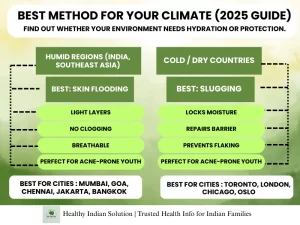
Choosing between Slugging and Skin Flooding in 2025 depends more on your skin type, lifestyle, and climate than the trend itself. Both methods help with hydration, but they work in totally different ways. Here is the simplest breakdown based on what dermatologists highlighted in recent research 2025.
Best for Dry or Dehydrated Skin – Skin Flooding
Skin Flooding is more effective if your skin feels tight, dull, or absorbs products quickly.
Rather than retaining moisture, it gradually adds hydration.
It is therefore perfect for:
- Students who sit in AC rooms.
- People working in offices.
- Young skin that needs hydration but not heavy products.
- Skin that gets oily with thick creams.
A major benefit of 2025 skincare regimens is that Skin Flooding keeps skin bouncy, fresh, and non-greasy.
Best for Barrier Repair – Slugging
Slugging is the winner if your skin feels:
- Rough or flaky.
- Over-exfoliated.
- Damaged after using actives.
- Irritated due to weather or pollution.
A thin layer of occlusive creates a shield so your natural moisture doesn’t escape. This helps your skin repair itself faster especially at night.
Best for Humid Regions (India, SEA) – Skin Flooding
Your skin already receives moisture from the air in humid weather. When you apply thick layers, such as petroleum jelly, your skin may feel:
- Sticky
- Sweaty
- Congested
Because Skin Flooding keeps hydration lightweight and comfortable, it is preferred by people in India, Indonesia, Malaysia, Singapore, and Thailand.
Best for Cold or Dry Regions (US, UK, Canada) – Slugging
Cold wind and low humidity strip moisture from the skin instantly.
In these regions, slugging helps:
- Lock in hydration overnight
- Prevent dry patches
- Maintain a strong skin barrier in harsh winters
- It’s especially useful during snow season when skin becomes extremely dry.
Best for Mixed Skin – Mild Flooding + Targeted Slugging
Use this combination if your cheeks are dry but your T-zone is oily:
- Skin Flooding all over the face.
- Slugging only on dry areas (cheeks, around mouth, under eyes).
Without making your entire face oily, this provides hydration where it’s needed.
“Your skin doesn’t need trends it needs the right technique for your environment.” Choose based on your climate and skin needs, not hype.
8. Note from Healthy Indian Solutions


Knowing what your skin actually needs will help you find the ideal routine between Slugging and Skin Flooding. You’ll see clearer, healthier skin when you select the approach that best suits your skin type, lifestyle, and climate. Skincare is ultimately a journey rather than a rush.
As Healthy Indian Solution reminds you, consistency is more costly than skincare.
“Glow comes from habits, not hacks.”
If you found this helpful, explore more of our blogs on hydration, skin repair, and barrier health for deeper guidance.