
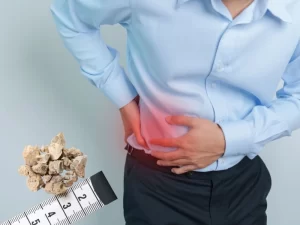
What are kidney stones?
Kidney stones are tiny hard pieces that can form inside your kidneys. They’re made when some things in your pee like salt, minerals, or acid stick together and make small lumps. These stones can be as tiny as a grain of sand or, in rare cases, grow bigger like a small ball.
Doctors also call them renal stones or nephrolithiasis, but let’s stick with “kidney stones” as it’s easier to say and remember.
Do all kidney stones hurt?
Not always!
If the stone is very small, you might not feel anything at all. It can quietly leave your body when you pee without pain.
But if the stone is bigger, it can get stuck in a tube called the ureter (this tube takes pee from your kidney to your bladder). When that happens, your pee can’t flow properly, and your kidney can’t do its job well.
This can lead to:
1. Pain (sometimes very sharp)
2. Trouble peeing
3. Blood in urine
Some stones may pass on their own in a few days or even weeks. But if the stone is too big, you might need a doctor’s help to break or remove it.
How many people get kidney stones?
Kidney stones are more common than you think.
Around 1 out of 10 people will get one at some point in life.
They usually happen more in:
- Men (especially between the age of 30 to 40)
- People with poor water intake
People who eat too much salty or junk food
They are also seen more in some groups like non-Hispanic white people, but anyone can get them.
Symptoms and Causes
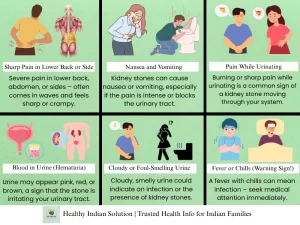
How do you know If you have a kidney stone?
When you have a kidney stone, your body gives some signs to tell you something is wrong.
The most common sign is pain. This pain usually happens in your lower back, stomach, or side of the body. Sometimes the pain even moves to your private area (groin).
It can feel like:
1. A dull ache (light pain that doesn’t go away), or
2.A sharp pain that comes and goes in waves (this is called colicky pain).
Other signs of kidney stones:
Here are some other things you might feel or notice if you have a kidney stone:
- Feeling like throwing up (nausea).
- Vomiting.
- Blood in your urine (it may look pink, red, or brown).
- Burning or pain when you pee.
- Not being able to pee properly.
- Wanting to pee again and again.
- Fever or chills (if there’s an infection).
- Pee looks cloudy or smells bad.
Why do kidney stones happen?
Ever wondered how these tiny painful stones are made in the first place? Well, the answer lies in your pee (urine).
Your pee has many things in it like salts, minerals, and acids. These are usually fine. But when you have too much of these substances and not enough water in your body, they start to stick together and slowly form into small crystals. These crystals then grow bigger and turn into stones inside your kidneys.
Different types of kidney stones and from what are they made of?
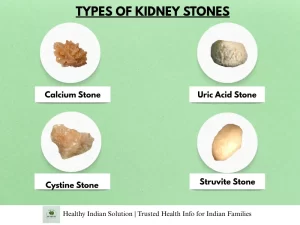
Not all kidney stones are the same. They are made from different things found in your pee. Let’s break it down in the easiest way.
1. Calcium stones (Most common one)
These are the most popular type of stones people get.
They can be made from:
1. Calcium + oxalate (from things like spinach, nuts, chocolates)
2. Calcium + phosphate
They can happen when:
1. You eat too much food with oxalate
2. You eat very little calcium
3. You don’t drink enough water
2. Uric acid stones
These form when you eat too much animal-based food like:
- Chicken, eggs, mutton, fish, etc.
This kind of food makes your pee more acidic, which can lead to stone formation.
3. Struvite stones
These stones grow due to urine infections caused by bacteria.
If you get urine infections again and again, these stones can grow very big sometimes they even look like the shape of a deer horn! Doctors call that a staghorn stone, and it usually needs surgery to remove.
4. Cystine stones (very rare)
These happen because of a genetic problem called cystinuria.
In this case, your body passes too much of a substance called cystine into the pee, which turns into stones. These types are rare and usually seen in people from birth.
Who has a higher chance of getting kidney stones?
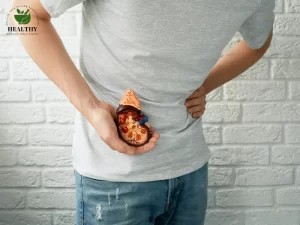
Some people have more chances of getting stones than others. Here’s why:
1.Not drinking enough water every day.
2.Eating too much salt or sugar (like junk food or soft drinks).
3.Eating too much meat or eggs.
4.Taking too much Vitamin C (like tablets).
5.If your parents or relatives had kidney stones.
6.If you had stomach surgery (like gastric bypass).
7.If you have blockage or infection in your urinary tract.
8.Taking some medicines (like water pills, antacids, or some epilepsy medicines).
9.If you have certain health problems (like obesity, diabetes, or gout).
Smart Tip:
More water + healthy food = less chance of kidney stones.
What health problems can increase the risk of kidney stones?
Did you know that some medical issues can make you more likely to get kidney stones?
Yes, If you have certain health conditions, your chances of forming stones go up. Let’s look at them in a simple way.
Common health problems that can lead to kidney stones:
- Cystinuria – A rare problem from birth where a substance called cystine builds up in your pee and forms stones.
- Cystic Fibrosis – A condition that affects lungs and digestion, and can also increase stone risk.
- Diabetes – People with diabetes often have more acid in their pee, which can lead to stone formation.
- Gout – A condition that builds up uric acid in your body, leading to uric acid stones.
- High Blood Pressure – Can damage kidneys and increase stone chances.
- Osteoporosis – Weak bones can cause more calcium to enter your pee, forming stones.
- IBD (Inflammatory Bowel Disease) – Gut problems like Crohn’s or colitis affect how your body absorbs nutrients and can lead to stone formation.
- Obesity – Being overweight affects how your body handles minerals and acids, increasing stone risk.
- Paralysis (Hemiplegia or Paraplegia) – Less movement can affect how the body works, including urine flow.
- Parathyroid Disease – This tiny gland controls calcium levels. If it doesn’t work properly, it can lead to too much calcium in the urine.
- Primary Hyperoxaluria – A rare problem where your body makes too much oxalate, which can form stones.
- Hypercalciuria – When too much calcium is passed in the urine, stones are more likely to form.
- Kidney cysts – Fluid-filled bubbles in kidneys can sometimes increase stone risk.
What can happen If kidney stones are not treated?
Leaving kidney stones without treatment can cause big problems. Here are some things that can go wrong:
Blockage in your kidney – Pee gets stuck and the kidney swells. This is called hydronephrosis.
Kidney Infection – Bacteria can grow around the stone and cause infection (called pyelonephritis).
Sudden kidney problem – Your kidneys can stop working for a short time (acute kidney injury) but this can be treated if caught early.
Repeated Infections – You might keep getting urine infections (UTIs) again and again.
Long-term kidney damage – If not treated properly, stones can lead to chronic kidney disease (CKD) over time.
How do doctors find out If you have kidney stones?
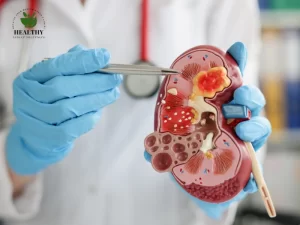
If you feel pain in your back, belly, or have trouble peeing, your doctor may think you might have a kidney stone. But how do they know for sure? They’ll run a few simple tests to find out.
Let’s understand it in easy words:
1. Urine test (Pee test)
Your doctor may ask you to give a pee sample. This helps them check:
1.If there’s any blood in your urine.
2.If there are crystals that could turn into stones.
3.If there are signs of a urine infection.
It’s a simple and quick test.
2. Imaging test (To See the stones inside)
To find out where the stone is and how big it is, doctors use special pictures of your body:
- X-ray – Like a photo of the inside of your body.
- CT scan – A more detailed picture that shows the stone clearly.
- Ultrasound – A safe and quick way to check if there’s a stone (used often for kids and pregnant women).
These help the doctor see:
1.Size of the stone.
2.Where it’s stuck.
3.How many stones are there.
3. Blood test
A small amount of your blood is checked to:
1.See how well your kidneys are working.
2.Find if there’s too much calcium or uric acid in your blood.
3.Check for any infections in the body.
This helps the doctor understand why the stone formed and what to do next.
How do doctors treat kidney stones?
- Kidney stone treatment depends on how big the stone is, where it is, and how much trouble it’s causing.
If the stone Is small
If your stone is small and not causing any infection, your doctor might say:
- Just wait — it may come out naturally when you pee.
- Drink lots of water — this helps push the stone out.
- Take pain medicine — because even small stones can hurt a lot.
- Take medicine to relax your urine pipe (like tamsulosin or nifedipine) — this helps the stone move and pass easily.
If you feel sick or want to vomit, the doctor may give medicine for that too.
Point to note:
Don’t take painkillers like ibuprofen without asking your doctor. In some cases, it can harm your kidneys.
If the stone is big or not moving
If your stone is too big, stuck, or causing a blockage or infection, then it won’t pass on its own. In such cases, your doctor will choose a treatment or procedure to break or remove it.
Let’s look at the most common ones:
1. Shockwave treatment (SWL or Lithotripsy)
- The doctor uses shockwaves from outside your body to break the stone into small pieces.
- Once broken, the tiny pieces pass out easily through your pee.
2. Ureteroscopy (stone removal using a thin tube)
- The doctor puts a thin camera tube through your private part (urethra) and goes into the bladder and ureter.
- Using small tools, they break the stone and remove it or let the tiny pieces pass out naturally.
3. Percutaneous nephrolithotomy (PCNL)
- If the stone is very big or other methods don’t work, this method is used.
- The doctor makes a tiny hole in your back, puts a tube directly into your kidney, and breaks the stone using sound waves or tools. Then they remove it.
4. Laparoscopic surgery (and rarely open surgery)
- If nothing else works or the stone is in a hard-to-reach place, the doctor might do laparoscopic surgery (a small cut) to remove it.
In rare cases, they may need to do open surgery with a bigger cut.
Can kidney stones come out on their own?

Yes, in most cases they can!
Around 8 out of 10 kidney stones are small enough to come out naturally when you pee without surgery. But how fast that happens depends on how big the stone is and where it is inside your body.
How long does It take for a stone to pass?
It depends on the size of the stone:
1.Smaller than 4 mm → Usually comes out in 1 to 2 weeks.
2.Bigger stones → May take 2 to 3 weeks or more.
3.Once the stone reaches your bladder, it usually comes out in a few days.
Point to note:
But remember it can still be painful while coming out, even if it’s small.
When should you see a doctor?
Even if you think it’s a small stone, you should still see a doctor to be sure. They will:
Check for any blockage.
Make sure there’s no infection or swelling.
Guide you on what to do next.
If the stone doesn’t come out within 4 to 6 weeks, it’s important to go for a follow-up your doctor may suggest further treatment.
What happens If you have kidney stones?
If you find out you have a kidney stone, don’t panic, Many people get them, and most can be treated easily.
Here’s what usually happens:
Small stones (less than 6 mm):
1.About 9 out of 10 pass out on their own.
2.You may only need water, rest, and some medicine.
Big stones (more than 6 mm):
1.Only about 6 out of 10 pass naturally.
2.Others may need treatment like shockwaves or minor surgery.
Point to note :
Even small stones can change position, grow in size, or get stuck, blocking the flow of pee. That’s when it becomes a bigger problem.
Will I get kidney stones again?
If you’ve had one, there’s a good chance you might get another one someday. That’s why it’s important to:
1.Drink more water every day.
2.Eat the right foods.
3.Avoid too much salt and animal protein
Point to note:
Follow your doctor’s advice sometimes they give medicine to prevent stones from coming back.
What’s the Best Way to Remove Kidney Stones?
If your doctor says your stone can pass naturally, then here’s what you should do:
- Drink lots of clean water it helps wash out the stone.
- Take medicines your doctor gave you they can reduce pain and help relax your urine pipe.
- Eat a healthy diet avoid too much salt, sugar, soft drinks, and junk food.
- Avoid foods that are high in oxalate (like spinach, chocolate, and nuts) if your doctor tells you to.
Point to note:
And always follow the tips your doctor gives based on your stone type.
Natural home remedies for kidney stones (Backed by Indian traditions & modern research)
A quick word of caution
Before trying any natural or home-based remedy for kidney stones, it’s important to consult your doctor. Some types of stones require medical attention or specific treatments. Also, certain herbs may interact with your current medicines or supplements, especially if you have chronic conditions like heart or kidney disease.
Pregnant or breastfeeding women should avoid using herbal remedies unless approved by a healthcare provider. Always prioritize safety over self-treatment.
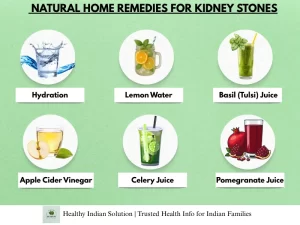
1. Stay hydrated with water
The simplest and most powerful remedy for kidney stones is drinking plenty of water. Staying hydrated helps your kidneys flush out minerals and prevents crystal buildup that causes stones.
Aim to drink enough water so your urine stays light yellow throughout the day. If it’s dark yellow, that’s a clear sign of dehydration. On average, producing about 2 liters of urine daily helps reduce stone formation.
2. Lemon water for citrate boost
Adding fresh lemon juice to your daily water intake can help. Lemons are rich in citrate, a compound that prevents calcium stones from forming and may even break small ones into pieces, making them easier to pass.
While you’d need large quantities to see major effects, even small amounts daily can help your kidney health while giving you a dose of vitamin C and natural antibacterial benefits.
3. Basil (tulsi) juice
Tulsi, known for its powerful healing properties in Ayurveda, supports kidney function and reduces inflammation. Studies show basil contains antioxidants and natural detox compounds that may help maintain kidney health.
You can brew tulsi tea using fresh or dried leaves, or blend fresh basil into a smoothie. However, long-term or excessive use hasn’t been well studied, so consume in moderation.
4. Apple cider vinegar mix
Apple cider vinegar (ACV) contains acetic acid, which helps soften and dissolve kidney stones while supporting kidney detoxification. It may also relieve mild pain associated with stones.
Mix 2 tablespoons of ACV in 1 glass (200 ml) of water and drink it once daily. You can also add it to salads or use it in cooking.
Avoid consuming more than one glass per day to prevent side effects like tooth enamel erosion, acid reflux, or throat irritation. People with diabetes or those on insulin/diuretic medication should speak to a doctor before trying this remedy.
5. Celery juice
Celery has long been used in traditional Indian remedies for urinary tract cleansing. It promotes healthy urine flow and may prevent stone formation.
Blend 1–2 celery stalks with water to make a fresh juice. Drink once daily for a few days each week.
While animal studies show benefits, there’s limited research on humans so moderation is key.
6. Pomegranate juice
Pomegranates are rich in antioxidants that protect the kidneys from oxidative stress. Regular intake may help maintain kidney health, though there’s no solid evidence it directly prevents stones.
You can enjoy a small glass (about 100–150 ml) daily. Avoid overconsumption if you take cholesterol-lowering or blood pressure medicines, as pomegranate may interfere with these drugs.
7. Kidney bean broth
In many Indian households, rajma (kidney beans) broth is considered a gentle natural drink for kidney cleansing. It provides protein and may support urinary tract health.
To try it, boil kidney beans, strain the liquid, and drink the broth a few times a day. While evidence is limited, it’s a nutritious option and can complement a kidney-friendly diet.
8. Dandelion root or leaf tea
Dandelion has mild diuretic properties that may help the kidneys remove waste and excess minerals. Early studies suggest dandelion extracts could reduce stone formation, but more human research is needed.
You can make dandelion tea using dried roots or leaves. However, those with heart issues, blood pressure problems, diabetes, or kidney disease should consult a doctor before using it regularly. People allergic to plants like ragweed, marigold, or daisies should also avoid it.
Prevention
You can definitely lower your chances of getting kidney stones again! What you eat and drink every day plays a big role. If you follow some easy habits, you can stay safe from stones in the future.
Let’s understand it down simply
1. Drink more water every day
- Water is your best friend when it comes to kidney health.
- It helps flush out the stuff that can turn into stones.
Tip: Try to drink at least 8–10 glasses of clean water daily. If your pee looks yellow or dark, drink more.
2. Eat less meat
- Too much chicken, mutton, fish, and eggs can raise the risk of stones.
- Try to limit non-veg food if possible. You don’t have to stop it completely just keep it in control.
3. Avoid too much salt and sugar
- Extra salt and sugar in food can cause stone formation.
- Use less salt while cooking
- Skip sugary drinks like soft drinks or packaged juices
- Stay away from too many sweets or snacks
4. Watch out for high-oxalate foods
Some foods can increase stone chances especially if you already had calcium oxalate stones.
Try to eat less of these items:
- Spinach
- Peanuts and tree nuts
- Wheat bran
- Rhubarb (rare in India, but avoid if seen)
5. Keep your body weight healthy
- If you are overweight, your chances of getting stones go up.
- So it’s important to stay active, eat light, and avoid junk food.
- You don’t need a six-pack, just try to stay fit and balanced.
6. Eat foods with natural calcium (not pills)
- This may surprise you but natural calcium foods like curd, milk, paneer can actually help prevent stones!
- But avoid calcium supplements or antacids with calcium unless your doctor says it’s okay they might do the opposite.
7. Take medicine If needed
- If food and lifestyle changes aren’t enough, your doctor may give you special medicines to stop stones from forming.
The type of medicine depends on what kind of stones you get (like calcium, uric acid, or others).
Can I live a normal life even If I get kidney stones?

Yes, life doesn’t stop if you get kidney stones.
They can be painful for some time, but once they come out through pee or get treated, you can get back to normal life.
So don’t worry with the right care, you can live just like before.
Are kidney stones life-threatening?
No, not at all. Kidney stones don’t cause death.
But yes, if you ignore them for too long, they might create problems like infection or block urine flow and that can damage your kidneys. So just get proper treatment on time, and you’ll be fine.
Can kidney stones lead to kidney disease?
If you’ve had stones once, you might get them again. And if they keep coming back or block your urine too often, they can slowly hurt your kidneys.
That’s why it’s important to take care, follow a healthy diet, and drink enough water.
When should I visit a doctor?
See your doctor if you:
- Have strong pain in your back or lower belly
- See blood in your urine
- Feel burning while peeing
- Keep getting fever or chills
A doctor will check where the stone is, how big it is, and what to do next.
When should I go to the emergency room?
If the pain is too much to handle, or you feel like vomiting a lot, don’t wait go to the hospital immediately.
Doctors will give you quick pain relief and make sure your body doesn’t lose water or get infected.
What should I ask my doctor?
Here are some good questions to ask your doctor when you meet them:
- Do I really have a stone or is it something else?
- What kind of kidney stone is it?
- How big is the stone?
- Where exactly is the stone stuck?
- How many stones do I have?
- Will it come out on its own or do I need treatment?
- Should I get checked for kidney damage?
- What food should I eat or avoid to stop it from coming again?
- Which treatment will be best for me?
Note from Healthy Indian Solutions

Kidney stones can come suddenly and bring a lot of pain. Sometimes they go away on their own, but in many cases, they need attention. Ignoring them can make things worse.
That’s why it’s important to act early drink plenty of clean water, take your medicines properly, and follow the food habits your doctor suggests. These small steps can bring big relief. At HealthyIndianSolutions, we believe that awareness and early care are the best ways to handle kidney stones. The good news? This pain won’t last forever with the right care, it will pass.